



Same-job comparison to buyer fit
Hold a shared decision steady, compare alternatives against it, expose tradeoffs, and make the recommendation conditional on the buyer.
The four frames are the beats of that post — Claude’s biggest, 5M views. Open the post →
Keeping the decision constant may help viewers translate differences into a choice relevant to their own situation.
A feature checklist, unsupported ranking, or comparison without a shared job is insufficient.
Every video in these playbooks counts toward the 911 posts. A video in more than one playbook is counted once.
Adobe Express · Best free editor sponsorship wave · 6 posts
It compares editors on the shared job of choosing a free tool and maps tradeoffs to the buyer.
Open playbook →Adobe Express · Price and alternative search · 11 posts
A buying decision is resolved through price and feature tradeoffs between free templates, Express, and professional software.
Open playbook →Bolt.new · Make production readiness the comparison axis · 13 posts
The same app job is held constant while builders are compared by production-readiness tradeoffs and buyer fit.
Open playbook →Cal AI · The honest-limit endorsement · 15 posts
It compares Cal AI with weighing and MyFitnessPal for the shared job of meal measurement, exposes accuracy and speed tradeoffs, and identifies the fit as rough consistency rather than magic.
Open playbook →CHAI · Put CHAI on the switching shelf · 25 posts
Companion alternatives face the same use case; behavior and limits supply the switching decision.
Open playbook →Character.AI · Make Character.AI the baseline · 44 posts
Character.AI establishes the shared baseline, another app runs the same job, and the response gap drives the verdict.
Open playbook →ChatGPT · Task-based model and plan decision · 15 posts
It holds real jobs constant, compares plans or rivals, and tells different users when the free option is sufficient.
Open playbook →Claude · Task-fit comparison · 12 posts
It runs identical tasks across tools, exposes workflow differences, and positions Claude as a specialist rather than a universal winner.
Open playbook →Creatify AI · Compare the job, then pick the tool · 7 posts
It starts from a buyer bottleneck, compares tools by the same job and tradeoffs, and recommends a workflow according to that job.
Open playbook →Cursor · Same task, competing coding agents · 37 posts
It holds one developer decision constant, compares tools on that decision, and turns workflow differences into a winner.
Open playbook →Duolingo · Compare Super and Max, then match the plan to the learner · 3 posts
It frames two plans as the same learner decision, compares their added value, and recommends each according to learner goals.
Open playbook →Final Round AI · Competitor-grid verdict · 84 posts
The script compares interview tools against different stages of the same interview workflow and makes the choice depend on the viewer’s workflow rather than declaring a universal winner.
Open playbook →Granola · Buyer-guide comparison shelf · 28 posts
The crowded meeting-notes category is held constant, alternatives are compared through capture-to-notes tradeoffs, and the bot-free mechanism determines fit.
Open playbook →Higgsfield · Copy the same tool-ranking matrix across micro accounts · 6 posts
The same job is evaluated across tools using a repeatable bad-better-best comparison for buyers.
Open playbook →Interview Coder · Own the comparison query · 12 posts
It compares assistants on the shared interview job and maps the tradeoff to the buyer.
Open playbook →inZOI · The Sims gap is the hook · 8 posts
It defines a shared simulation job, compares alternatives, and resolves the tradeoff by buyer preference.
Open playbook →Kling AI · Model shootouts sell motion physics · 60 posts
It compares generators on a shared motion job and makes the tradeoff legible for the buyer.
Open playbook →Lovable · Buyer-fit comparison · 17 posts
Each tool is assigned a job, Lovable is tested against the same decision, and the result is segmented by buyer identity rather than declared universally superior.
Open playbook →LTX Studio · Same test → model shootout · 30 posts
One shared task is run across alternatives and the paired outputs determine buyer fit.
Open playbook →Luma Dream Machine · Win the model-choice search · 76 posts
An explicit tool decision is tested on the same continuity/control criteria and resolved as a production tradeoff.
Open playbook →Magnific / Freepik AI · Make breadth and credit math the buyer's dilemma · 35 posts
The guide compares tiers through credits and production capacity, then identifies situations where the product is expensive or overkill, making fit conditional.
Open playbook →Magnific / Freepik AI · Use one workflow to sell access to many models · 17 posts
A concrete job uses a model selector to compare production choices inside a shared workspace.
Open playbook →Manus · Real brief before verdict · 34 posts
A constrained business brief is built into a deliverable, compared against alternatives, and judged against remaining human-review limits.
Open playbook →OpusClip · The clipping-tool matchup · 23 posts
The same creator job is run through competing tools and the switching decision is monetized even when the product loses, implying a conditional fit rather than a universal winner.
Open playbook →Oura · High-intent review stack · 80 posts
The review addresses purchase fit through hands-on proof and concrete sizing, subscription, and competitor tradeoffs that determine checkout.
Open playbook →Photoroom · Photos that sell versus photos that do not · 38 posts
The same selling job is tested through a side-by-side comparison for buyer fit.
Open playbook →Planner 5D · Easy visualization versus professional control · 15 posts
It holds the planning purchase decision steady, compares lightweight, Planner 5D, and CAD alternatives, and makes the recommendation depend on ease, precision, or output needs.
Open playbook →Remini · One job inside the creator stack · 7 posts
Neighboring tools are compared around one job and Remini is matched to the restoration buyer.
Open playbook →RoomSketcher · Put RoomSketcher on a buyer map · 20 posts
It holds a floor-plan job steady, compares tools on ease, precision, and output, and assigns RoomSketcher to the buyer whose workflow fits.
Open playbook →SmartDraw · Two tools → choose by job · 3 posts
It compares SmartDraw and a nearby tool on their ideal jobs and users, then makes the winner conditional on the use case.
Open playbook →Strava · Turn the subscription decision into a side-by-side test · 53 posts
It compares alternatives performing the same training job and converts differences into a practical purchase tradeoff.
Open playbook →Talkie · Comparison shelf for switching intent · 18 posts
The competing companion apps are shown for a switching decision and reduced to visible feature tradeoffs.
Open playbook →Udio · Speed versus control is the buying frame · 28 posts
The prompt is held constant, both tools perform the same song job, and speed versus editability becomes a subscription-fit tradeoff.
Open playbook →VEED · Production bottleneck → AI tool benchmark · 25 posts
A realistic production job is run through VEED and alternatives, with the output judged for repeatable use.
Open playbook →Whop · Score the platform tradeoffs · 6 posts
Compares competing platforms on a shared creator decision and makes the recommendation conditional on what the creator sells.
Open playbook →Wispr Flow · Win awareness inside the comparison · 19 posts
Alternatives are compared on a shared set of buyer criteria and interpreted for different purchase priorities.
Open playbook →Yope · Be the next Snapchat before everyone else arrives · 9 posts
Yope is compared with familiar incumbents around the shared social job, then positioned for the audience most likely to switch.
Open playbook →These examples explain the shared moves. They do not limit the video count.
1. Define the shared job and decision — source quotes
What they do is they take your transcript from your meeting and turn them into something useful
Granola · source post → · Playbook →
what am I paying for?
Strava · source post → · Playbook →
If you're trying to build an app with AI, stop wasting time choosing the wrong tool.
Lovable · source post → · Playbook →
2. Compare alternatives against that job — source quotes
But Granola AI is slightly different because what it does is it doesn't necessarily plug in with Google Meet or the other ones.
Granola · source post → · Playbook →
So what are the alternatives? Well one is commute, but again you've still got to pay for it
Strava · source post → · Playbook →
So in this video, I'll break down Replet vs. Lovable in the simplest way possible.
Lovable · source post → · Playbook →
3. Expose concrete tradeoffs — source quotes
it's $18 per month so it's not cheap compared to the other options I found several other options that were probably between $8 to $12 maybe even 14 some of them
Granola · source post → · Playbook →
I personally found that planning long distance routes has been a lot easier on commute, but at the same time planning shorter rides when I just wanted to do like a 50 mile road ride on a Sunday morning, I found a lot easier on Strava
Strava · source post → · Playbook →
But the trade-off is simple. Less control.
Lovable · source post → · Playbook →
4. Match the result to buyer fit — source quotes
what's nice is it bypasses a need for you to add it to every meeting which in my opinion can be a really nice avoidance for some people.
Granola · source post → · Playbook →
If you love training segments, can't lead the boards, it probably makes complete sense. But for me, when I look at what I actually use, I've realised I've been paying for years out of habit, not out of need.
Strava · source post → · Playbook →
If you're technical or want to grow into a real builder, Replet gives you more room to scale. If you want to test ideas quickly and launch a prototype fast, lovable is the easier starting point.
Lovable · source post → · Playbook →
What varies: Pricing reviews, workflow comparisons, subscription decisions, and buyer guides can vary the criteria, outcome, and CTA.
 1.3K×5.5MRemini · @ProTech Reviews
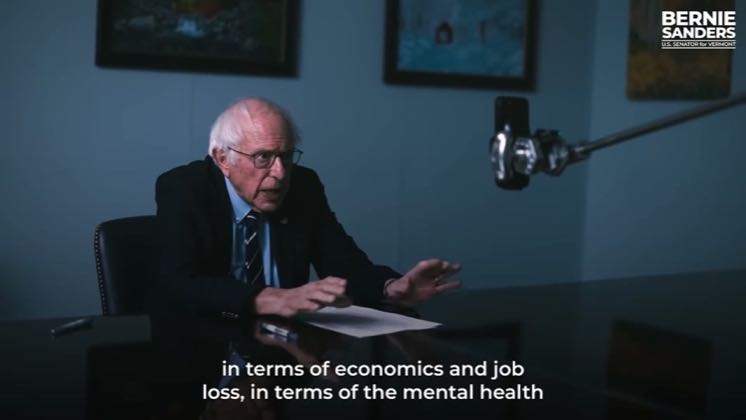 152×5MClaude · @Senator Bernie Sanders
 AFFILIATE452×1.8MinZOI · @l4dy_official
 493×1.7MPlanner 5D · @inspirationTuts CAD
 AFFILIATE1.3MManus · @Shark Numbers
 PROGRAM14.2×1.1MinZOI · @glimmersimmer
 PROGRAM2.1×1.1MCal AI · @Hussein Farhat | Online Fitness Coach
 3.9×953.1KCharacter.AI · @Shimi
 Final Round AI84Oura80
 Luma Dream Machine76
 Kling AI60
 Strava53
 Magnific / Freepik AI50
 Character.AI44Photoroom38
 Cursor37
 Manus34
 LTX Studio30
 Granola28
 Udio28
 CHAI25
 VEED25
 OpusClip23
 RoomSketcher20
 Wispr Flow19
 Talkie18
 Lovable17
 Adobe Express15
 Cal AI15
 ChatGPT15
 Planner 5D15
 Bolt.new13
 Claude12
 Interview Coder12
 Yope9
Yope9 inZOI8Creatify AI7
 Remini7
 Higgsfield6
 Whop6
Whop6 Duolingo3SmartDraw3All 35 apps →