



One source to multi-output inventory
Turn one reusable source into an explicit set of formats, clips, or study aids.
The four frames are the beats of that post — Gauth’s biggest, 7.5M views. Open the post →
A possible mechanism is that successive outputs make an abstract scale claim concrete and show how one input can feed several downstream uses.
A single transformation, ordinary export, or one finished artifact does not establish inventory; multiple steps must visibly or verbally branch from the same source.
Every video in these playbooks counts toward the 515 posts. A video in more than one playbook is counted once.
Adobe Express · AI Assistant launch shelf · 12 posts
The assistant turns one prompt into several named, editable asset types.
Open playbook →Adobe Express · Brand once, output everywhere · 15 posts
One anchor asset is explicitly duplicated, resized, animated, and scheduled across a campaign's output set.
Open playbook →CapCut AI · Blank timeline → conversational video agent · 19 posts
Manual editing burden is replaced by an agent workflow, with recovered production capacity redirected to campaign outputs.
Open playbook →CapCut AI · One product photo → complete content pack · 40 posts
The winning design system is generated and refined once, then batch-resized into several required formats.
Open playbook →CapCut AI · One product photo → a month of ads · 56 posts
A single product photo is explicitly used to batch-generate several image and video variants.
Open playbook →CapCut AI · Seedance campaign economics → comment funnel · 35 posts
References and generated clips branch into a campaign asset stack, with the access handoff gated through participation.
Open playbook →ChatGPT · Small-business department in a prompt · 28 posts
A single role-specific brief is expanded into a named inventory of channel plans, assets, KPIs, and calendar outputs.
Open playbook →DomoAI · One still becomes a whole cinematic system · 19 posts
One still branches into video, lip-sync, and upscale outputs, with the result shown before the reconstruction.
Open playbook →Gamma · Search-native full demo · 37 posts
One dashboard session branches into a presentation, website, and social post.
Open playbook →Gauth · Notes → instant study pack · 18 posts
One source—notes or lectures—is explicitly multiplied into a study guide, quizzes, and flashcards.
Open playbook →Granola · Notes-to-automation stack · 15 posts
Meeting context is routed through several downstream systems until it becomes finished work, with multiple adjacent outputs.
Open playbook →HeyGen · Partner proof matrix · 48 posts
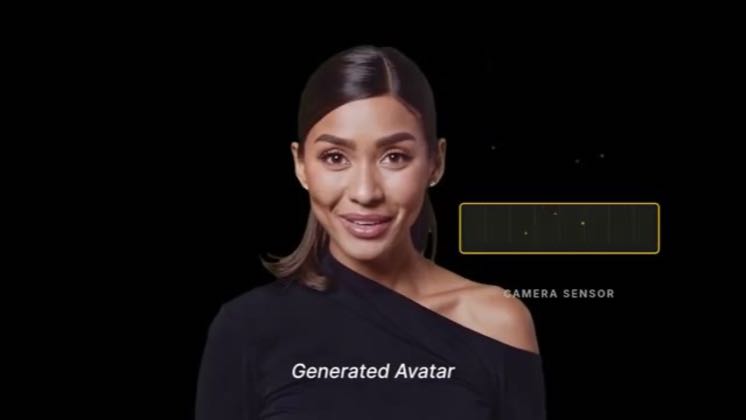
One short capture is explicitly multiplied into an inventory of scene, script, and language variants.
Open playbook →HeyGen · Prompt-to-production agent · 42 posts
One chat prompt branches into script, assets, narration, captions, pacing, and editing outputs.
Open playbook →invideo AI · One line → nine-frame storyboard · 9 posts
One story input branches into named storyboard frames, with consistency visibly verified.
Open playbook →Magnific / Freepik AI · Turn Spaces into a reusable production line · 22 posts
A reusable graph is established, then the same character, product, or brief is carried across multiple outputs, making reuse the central selling point.
Open playbook →Magnific / Freepik AI · Use Spaces Lists to Batch-Generate Creative Variants · 3 posts
Variable inputs feed one generator and visibly branch into a batch of named creative variants.
Open playbook →Mindtrip · Any inspiration becomes an itinerary · 23 posts
One unstructured travel source is converted into an explicit set of downstream outputs: places, maps, and an editable day-by-day plan.
Open playbook →OpusClip · Clipping side hustle · 11 posts
One trending podcast is converted into dozens of ranked shorts, an explicit output inventory.
Open playbook →OpusClip · Comment for the clipping stack · 15 posts
The workflow transforms a long source into a visible stack of finished cuts, making the output inventory the proof.
Open playbook →OpusClip · One hour becomes a week · 19 posts
One long recording is established as the reusable source and its resulting clips are counted as an explicit week of distribution inventory.
Open playbook →OpusClip · Niche content multiplier · 8 posts
An existing long-form archive is the reusable source and OpusClip finds multiple usable moments to expand its distribution.
Open playbook →StudyFetch · One upload becomes the whole study stack · 50 posts
The same notes are explicitly multiplied into several named study outputs.
Open playbook →These examples explain the shared moves. They do not limit the video count.
1. Establish the reusable source — source quotes
This is the visual we created in the previous episode.
Adobe Express · source post → · Playbook →
scanning old assignments, lectures the teacher posted, anything he missed
Gauth · source post → · Playbook →
upload my notes
StudyFetch · source post → · Playbook →
I've given it a 40-minute podcast episode.
OpusClip · source post → · Playbook →
2. Multiply that source into an explicit set of outputs — source quotes
Now adapt the same design into a horizontal format, resize to a 16-9 layout to fit wider compositions.
Adobe Express · source post → · Playbook →
and it turns into flashcards, practice, test, everything.
Gauth · source post → · Playbook →
I also make practice tests and they are gold.
StudyFetch · source post → · Playbook →
it comes back with a stack of those clips.
OpusClip · source post → · Playbook →
What varies: Format adaptation, study packs, and long-video clipping. Distribution, CTA, and the rest of the walkthrough vary; a sequence of scenes assembled into one final film is excluded.







 CapCut AI134
 HeyGen87
 StudyFetch50
 OpusClip47
 Gamma37
 ChatGPT28
 Adobe Express27
 Magnific / Freepik AI22
 DomoAI19
 Gauth18
 Granola15
 invideo AI9