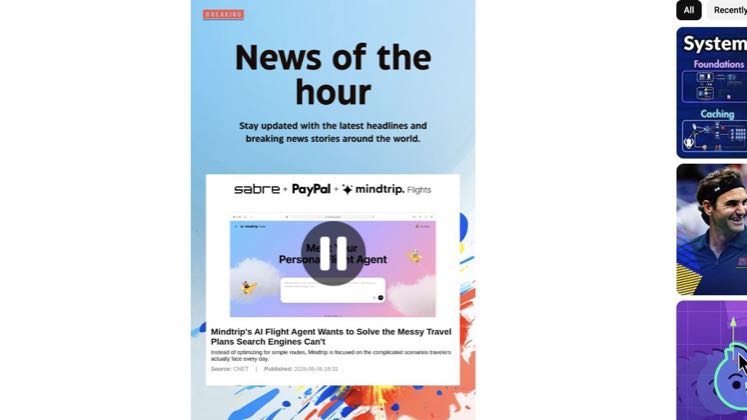
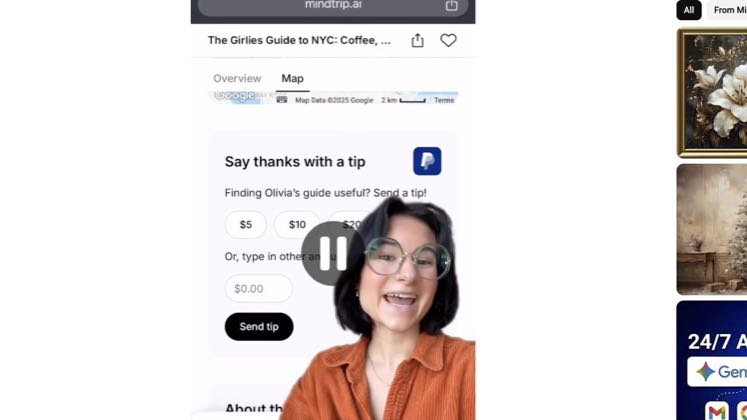
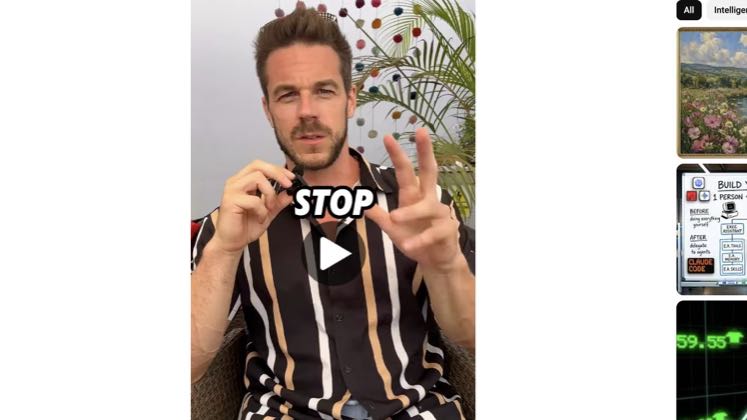
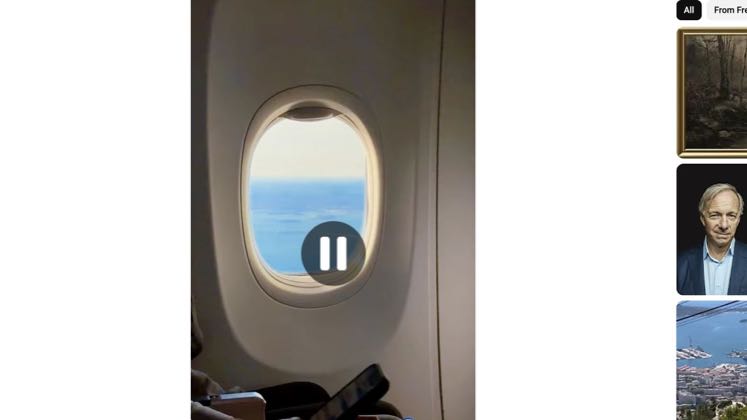
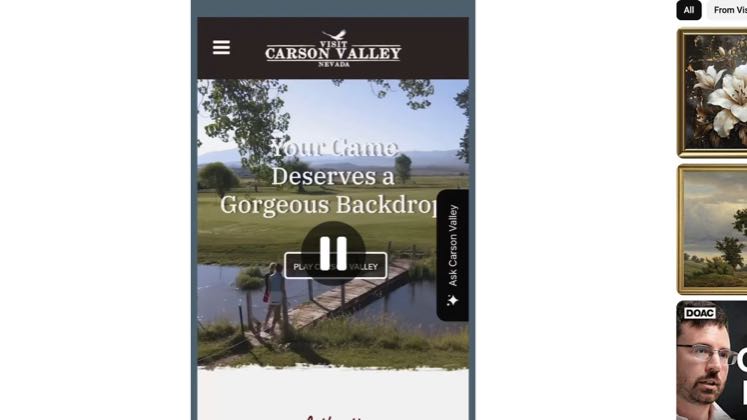
№1 Any inspiration becomes an itineraryCapture context, then hand off the workproven ✓Start with an unstructured travel input—a blog, photo, Reel, map list, preference, or question—then make Mindtrip's value visible by converting it into places, maps, and an editable day-by-day plan.→
 ▶1.7K@OpenAI
So I am Garrick Toubassi. I am a co-founder of Mindtrip, and I think more importantly, I'm standing between you and lunch.1HOOK · storyDisarm the audience before a technical demo0:00
First of all, what the heck is Mindtrip?2Establish the travel job beyond a chatbot0:49
But what really are we talking about?3Name inert text as the problem1:26
We then looked a lot at how, when people start the travel-planning journey, where they get that inspiration from.4Turn existing inspiration into the input2:39
Here I am in Mindtrip with a blank conversation.5Convert a Portugal article into a mapped plan3:25
669.7Kviews tracked↑1×a typical post vs the creator’s own median

 +1014creators ran it · 23 posts2 of 23 beat 2× their own median · best 660.1K · 1 past 100K
+1014creators ran it · 23 posts2 of 23 beat 2× their own median · best 660.1K · 1 past 100K