



Reusable identity through variants
Establish one person, character, or synthetic identity, then preserve it across new scenes, roles, languages, attributes, or formats.
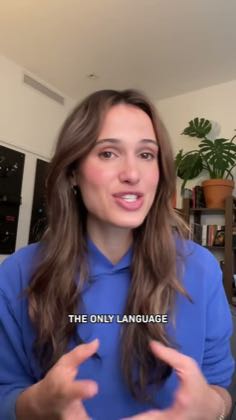
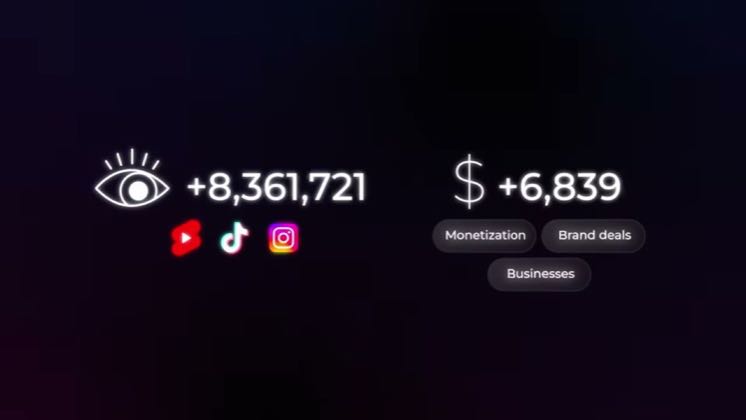
The four frames are the beats of that post — HeyGen’s biggest, 5.6M views. Open the post →
Each new variant may function as a continuity check while widening the viewer's picture of what the identity can do.
A single avatar generation, a one-off talking character, or a set of unrelated characters without a continuity test is outside this family.
Every video in these playbooks counts toward the 159 posts. A video in more than one playbook is counted once.
HeyGen · Fifteen-second identity launch · 19 posts
One reference performer is explicitly preserved across multiple changed scenes, attributes, roles, and scripts.
Open playbook →HeyGen · One face, many languages · 15 posts
The same face is preserved while language changes, making multilingual outputs the explicit identity-continuity test.
Open playbook →HeyGen · Partner proof matrix · 48 posts
One synthetic creator identity is established and then preserved across scenes, scripts, and languages without another capture.
Open playbook →Influencer Studio · Build the person once, make the product ad · 3 posts
One synthetic person is preserved through new scenes and formats before being reused in product-facing media.
Open playbook →invideo AI · One line → nine-frame storyboard · 9 posts
The nine-shot board makes the same face and coherent world persist across multiple shots, using continuity as the proof.
Open playbook →inZOI · Likeness is the game · 11 posts
A recognizable person or character is judged across changing expressions, styling, or attributes.
Open playbook →Magnific / Freepik AI · Turn Spaces into a reusable production line · 22 posts
A reusable source graph branches the same character, product, or brief into multiple outputs.
Open playbook →OpenArt · One character, every scene · 20 posts
One reference character is established and then tested across new poses, clothes, locations, and co-stars before a reusable workflow is handed off.
Open playbook →Pika · Black Mirror AI-double review · 4 posts
One recognizable self is reused across voice, selfie, and persistent agent variants.
Open playbook →Remini · Identity as a time machine · 20 posts
One recognizable identity is carried through generated age, avatar, or headshot variants.
Open playbook →These examples explain the shared moves. They do not limit the video count.
1. Establish the reusable identity — source quotes
This is Hedgen's new digital twin avatar.
HeyGen · source post → · Playbook →
I don't speak Spanish at all.
HeyGen · source post → · Playbook →
You've generated an image of a character or a person and you really like it
OpenArt · source post → · Playbook →
2. Vary its scene, language, clothing, or format — source quotes
Now I can create videos with different outfits.
HeyGen · source post → · Playbook →
you just select your video and then choose from over 175 different languages.
HeyGen · source post → · Playbook →
change the background and the clothing of Jimmy
OpenArt · source post → · Playbook →
3. Return to that identity in the generated variants — source quotes
it actually keeps my facial expressions, voice and movements looking natural the entire time.
HeyGen · source post → · Playbook →
And then it generates something like this.
HeyGen · source post → · Playbook →
come up with about six different images of the same character
OpenArt · source post → · Playbook →
What varies: Variants include digital twins, AI characters, multilingual versions, new outfits, new backgrounds, new scenes, and image-to-video reuse.






 HeyGen70
 Magnific / Freepik AI22
 OpenArt20
 Remini20
 inZOI11
 invideo AI9
 Pika4
Pika4 Influencer Studio3